
He Said
Getting back to similar worldviews, Bill and I had booked a tour of the West Bank with a guide named Kamal Mukarker. I found him on one of Rick Steves' television episodes on the Holy Lands, and I immediately looked him up and booked a tour. This turned out to be one of the most thought-provoking, eye-opening days of not just this trip, but of any trip.
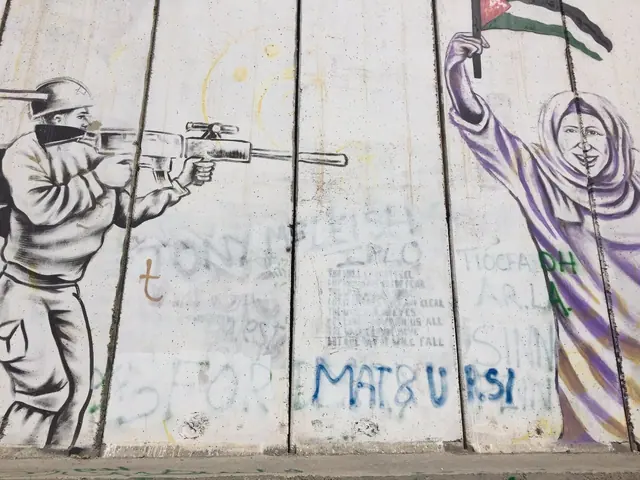
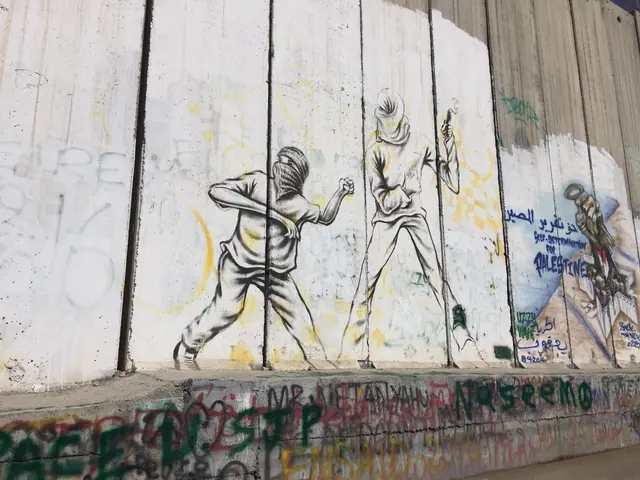
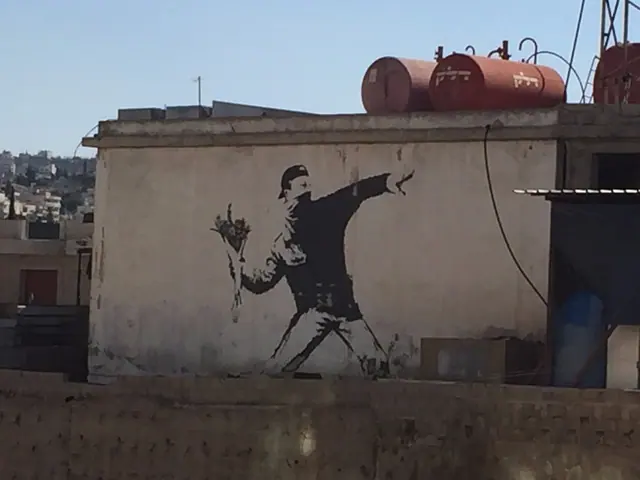
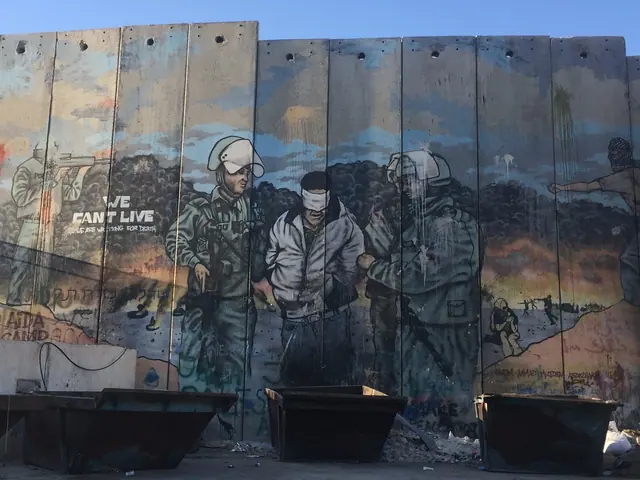
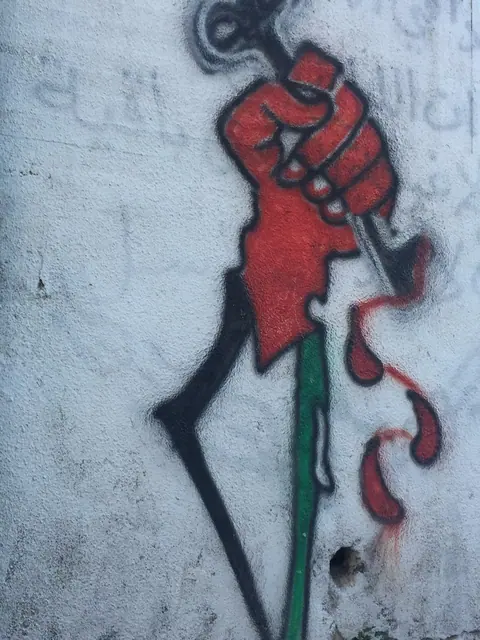
Kamal sent a private taxi to pick us up in Jerusalem for a full day in the West Bank. We drove east across the city until it was no longer Israel proper. We easily crossed the checkpoint getting into the West Bank (the other direction didn’t look so easy), and I immediately started snapping as many photos as I could of the graffiti on the Palestinian side of the wall.
It was political art like only I had imagined. A woman posed as Lady Palestine drew me in. She had Israeli soldiers pointing rifles at her to the left, and Palestinian boys throwing rocks at her to the right. I knew right then that she was going to be a hard lady to comprehend.
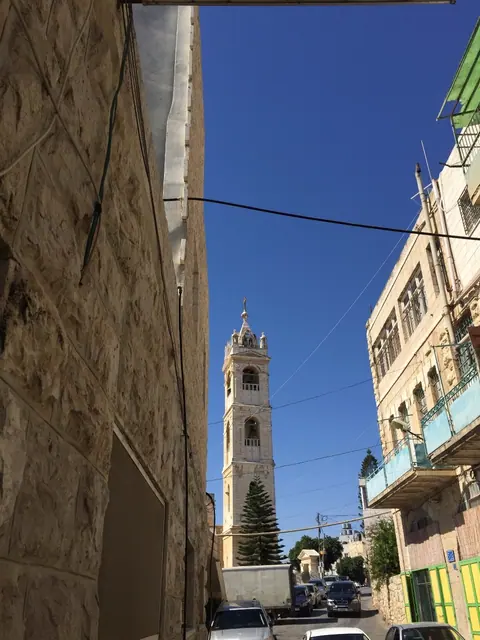
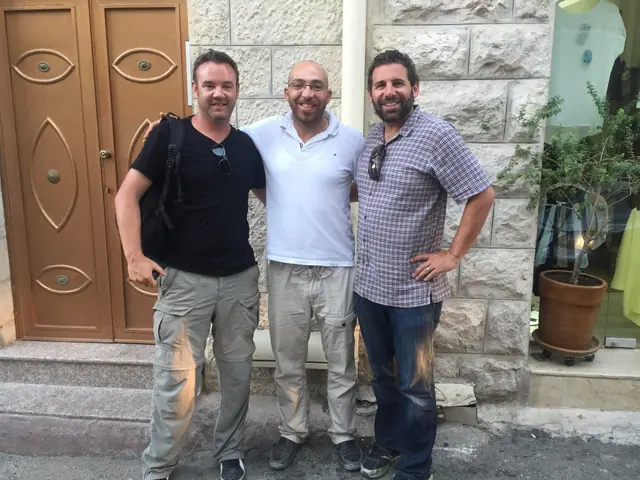
We drove around the edge of Bethlehem and into a town called Beit Jala. It’s a town of roughly 10,000, and it’s mostly Christians. This is where our guide lived, and when we pulled into a narrow alleyway at the top of the hill, Kamal was outside waiting. I immediately recognized him from the Rick Steves show.
He handed each of us a bottle of water, we hopped in his white Skoda, and back down the hill we went. We had planned to visit Bethlehem and Jericho, the oldest continuously inhabited city in the world with a lot of history, obviously, but Kamal brought up another option. Take a more political route and go to Hebron instead, while still getting a little bit of history. Without hesitation, Bill and I both agreed on the political tour. We bagged Jericho in favor of Hebron.
"So Rick Steves," Kamal said, “is a lot like many other Americans. He came to me and said he wanted to do a show on Palestine, that he wanted to humanize the Palestinian people. Show our culture, our food, our celebrations, but he did not want to get political. The first time, he was here for six days, and on the morning of the third day, he came in and said he had changed his mind. He said there was a story here that had to be told.”
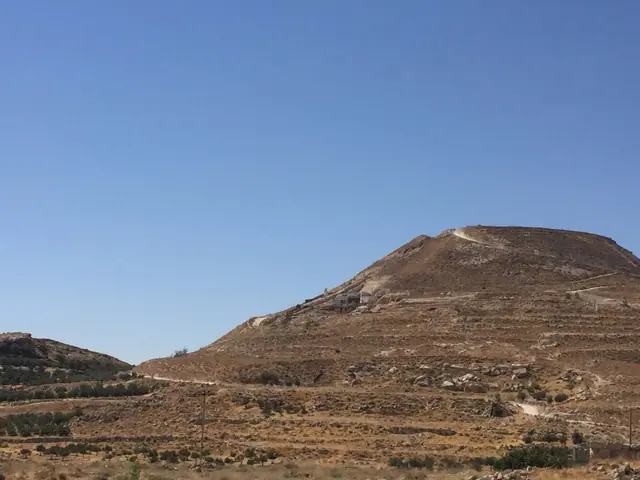
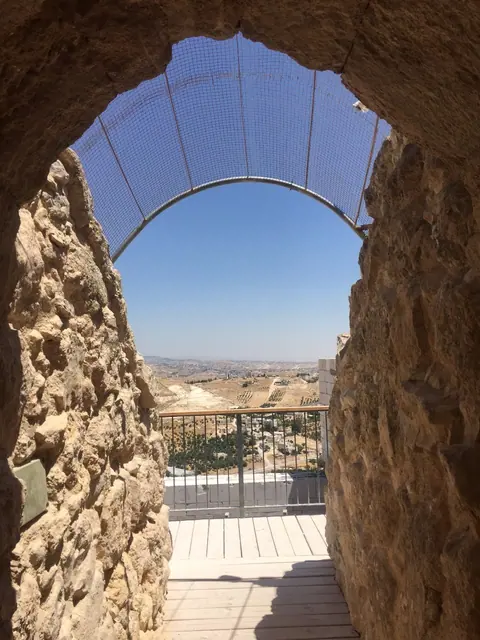
For Bill and I, that story began at the Herodium, an ancient hilltop palace built by Herod the Great around 20 BC. We got a glimpse into its history and about Herod himself, including his architectural fingerprint in the form of perfectly squared stones found all over Israel in places like the Western Wall. Kamal could sense our subdued engagement, though, and he quickly realized we were interested in the current political climate more than the ancient biblical one.
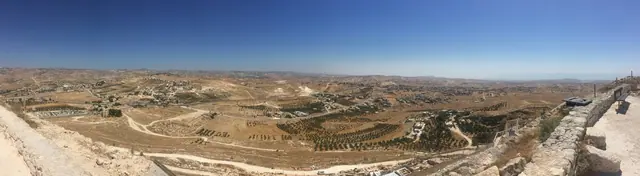
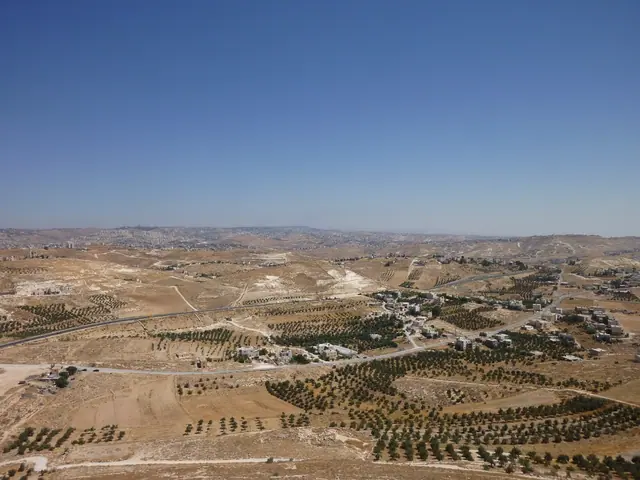
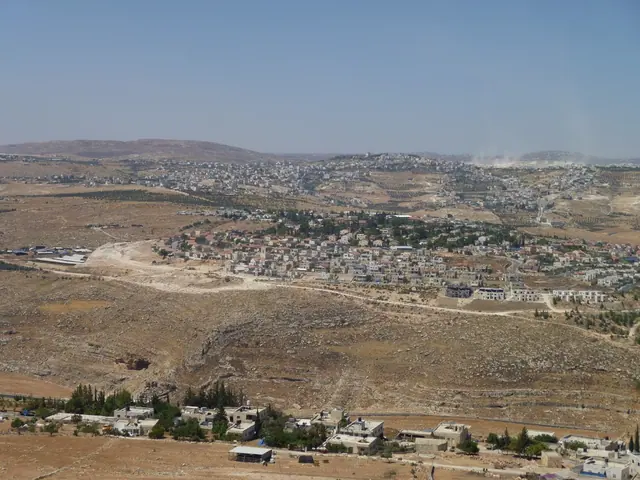
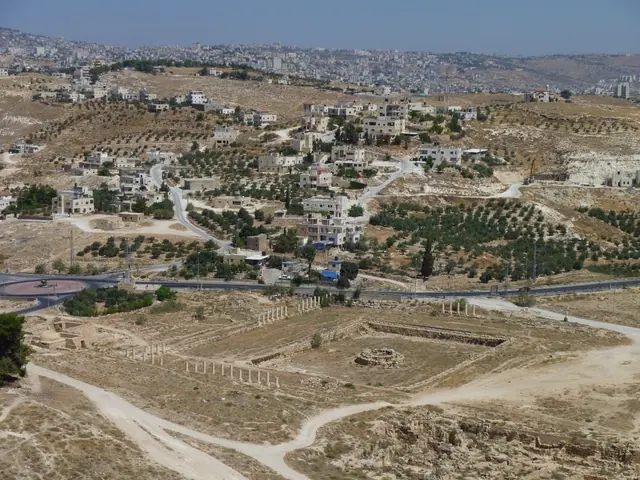
Instead of talking about Herod, we talked about settlements. And from the top of the Herodium, we had a panoramic view of Settlements 101, complete with visuals and sound effects.
“There are two types of settlements,” he said. “Illegal ones and legal ones. Now both are illegal in the eyes of the UN, but for the sake of this argument, let’s just talk about how the Israelis themselves see it.”
He pointed to two different clusters of homes. One was a legal settlement in the eyes of the Israeli government; one was illegal. What made one illegal was the fact that builders just rolled in and started building without permission. We were told the Israeli government does not actually stop this, though, and will only intervene when the Palestinian who claims to own the land can actually prove it.
How can the Palestinians claim their land? By referencing Ottoman-era land registry archives dating back to the early to mid 1800s. Even though families may have been working a plot of land for centuries, if the deed is not listed in that archive, the Palestinian claim to the land is not valid. We could hear the jackhammers and nail guns as construction continued.
Water is another major issue in and around the settlements. Even though we were standing directly over an underground aquifer, you could see the distinction between the settlements and the Palestinian neighborhoods in two easy ways. First, the settlements were much greener. They had lush vegetation. Second, the Palestinian homes had big grey or black tanks on top of their roofs to hold water. While the settlers have a 24/7 water supply, the Palestinian homes only get water on occasion, sometimes with a gap of up to two weeks.
“When the water comes on, it’s like a holiday,” Kamal said. “Also, there’s only one company allowed to access the water here in this aquifer, and it’s an Israeli company. And they sell the water at a discount to the settlers.”
On the way to Hebron, we drove through the hilly landscape passing both settlements and Palestinian neighborhoods all mixed together. One out of about every four cars heading in the other direction was a settler. They are easily distinguished because Palestinian vehicles have different colored license plates. At one point, the road divided a neighborhood to the left and a settlement to the right.
“I’m sure you heard about a month ago,” Kamal said, “but this neighborhood on the left is where the murderer was from. He crossed the main road here and went to the settlement where he slit a 13-year-old girl’s throat because she was a settler.”
Something bothered me about that statement.
“No, I think that’s wrong,” I said. “She wasn’t necessarily a settler. Her parents were settlers.” Later, this notion of raising your kids in these types of environments took on even greater meaning when we got to Hebron.
“Do you ever feel unsafe here?” Bill asked.
“No, not really,” Kamal said. “We’re about to go through an area, though, that a lot of my friends think I’m crazy to cross as much as I do.”
As we entered that area, Israeli soldiers were suddenly everywhere. It was a large roundabout-type intersection, with enormous concrete barricades stationed in each quadrant. Several Israeli soldiers pointed their rifles at every car that entered the circle. I could see why Kamal’s friends were apprehensive. Even as a white guy American, I felt intimidated.
In Hebron, we drove through a busy and vibrant city down to the edge of the market. People were walking everywhere – next to the street, in front of the street, in the street, anywhere you could imagine. You could tell instantly that it was almost like China in respect to a lack of rules for walking, biking, or driving.
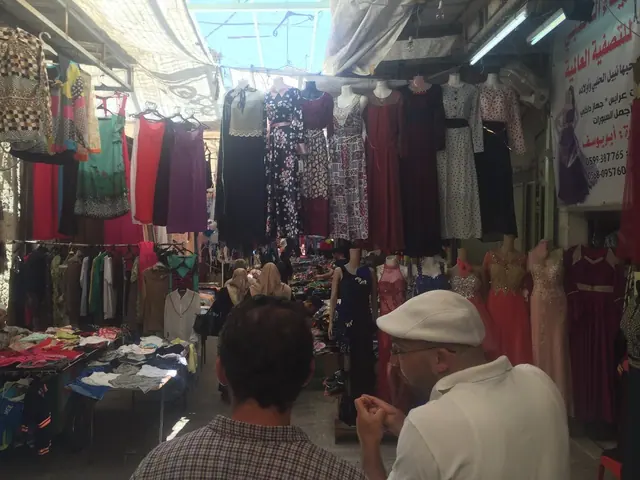
We parked the car, grabbed a fresh flatbread, and headed into the old market. It was a long, narrow walkway filled with shop stalls on each side, hardly any visitors, and proprietors eager to see new faces in the market.
THE SHOP STALL OWNER
For the life of me, I can’t remember his name. He went by, Alan, I think. He had studied in the U.K., and his family had worked in this shop stall for decades. He sold mostly textiles – scarves and rugs and other pieces that were intricately crafted by locals. It was not really my thing, but it was beautiful stuff.
“Would you guys like some coffee?” he said. He spoke perfect English. Maybe that’s why he might have gone by 'Alan.’
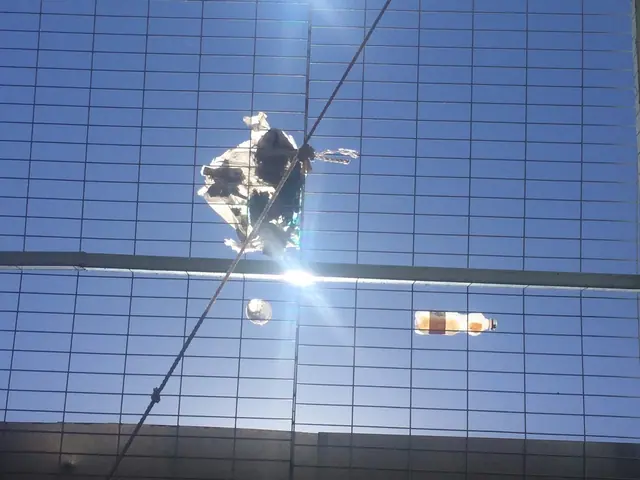
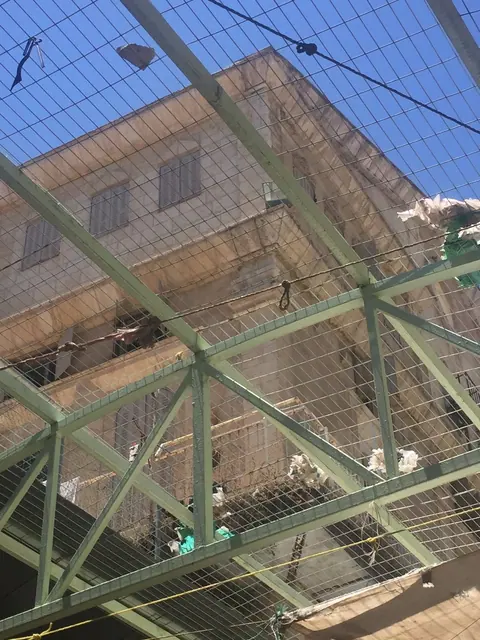
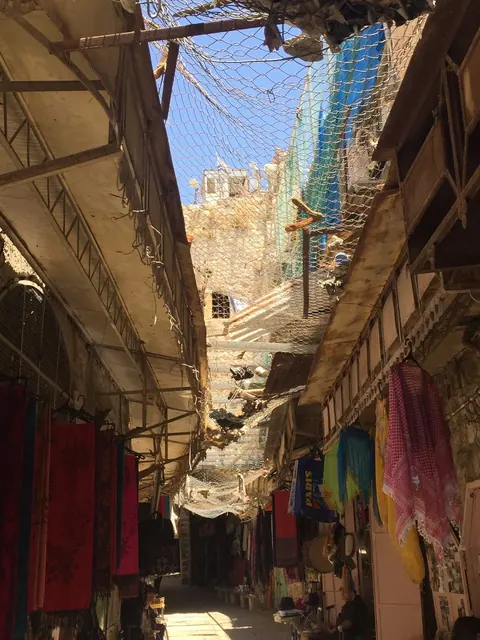
A guy came by with coffee, and the shopkeeper began telling us about the settlers in Hebron. They live in homes just above the old market. They like to throw things down on top of the shopkeepers. At best, it’s garbage. In reality, though, they throw piss, feces, bleach, eggs, and anything else they can think of. He showed us one of his scarves, stained down the length by raw egg yolk.
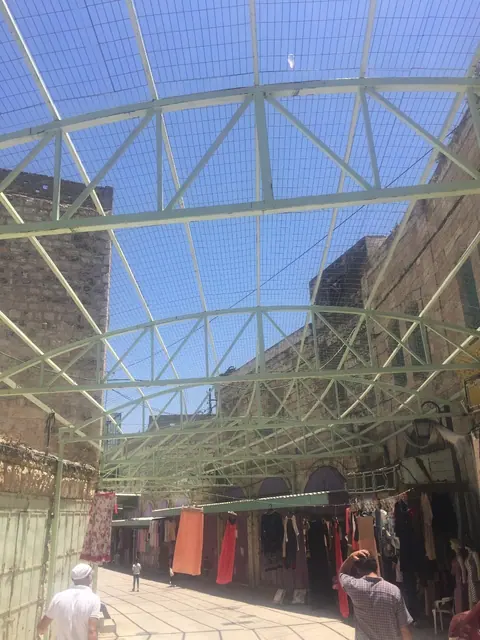
Because of all the stuff being thrown, a chain length fence, of sorts, covers the entire length of the market to protect the vendors below. A new modern cover is slowly replacing the older one, though a chain link fence no matter how new still won’t repel urine or bleach. I saw all kinds of garbage up there, and in one place, I even saw a child’s bicycle. Beyond the fence at regular intervals of about 100 yards and about 100 yards up into the air, you can see lookout stations manned by Israeli soldiers pointing their rifles down at the marketplace at all times.
“There are about 2,000 soldiers here protecting about 350 settlers,” he said.
According to Kamal, even the average Israelis don’t like the settlers in Hebron. They’re here to cause trouble, and most of them have American passports. Essentially, it’s an exercise in instigation, he said.
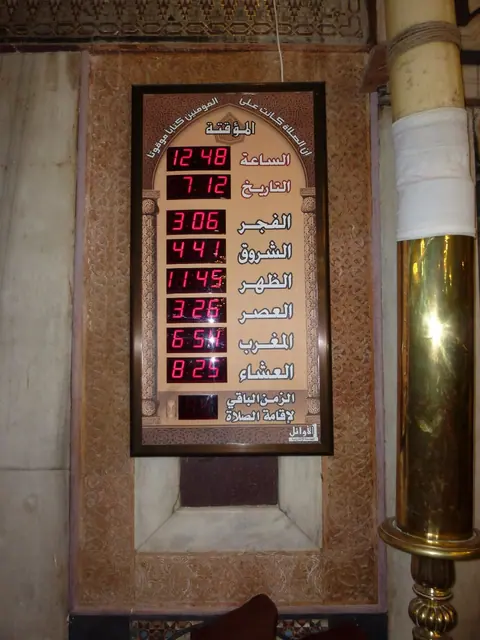
In fact, in February of 1994, one of those American-Israeli settlers entered the Mosque of Abraham and opened fire on worshippers during Ramadan killing 29 people. Even though most Israelis called him a disgrace, some of the settlers in Hebron viewed him as a hero and paid respects to him up until the last several years when the Israeli government decided to forbid it.
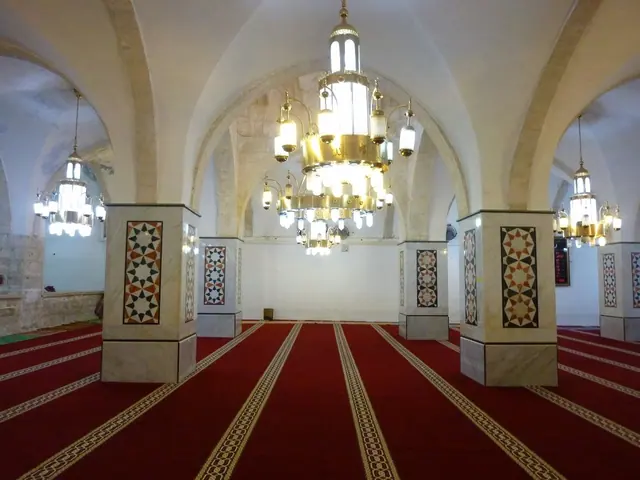
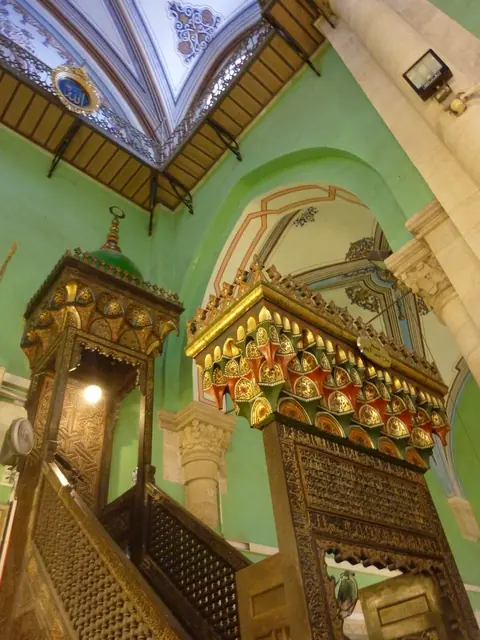
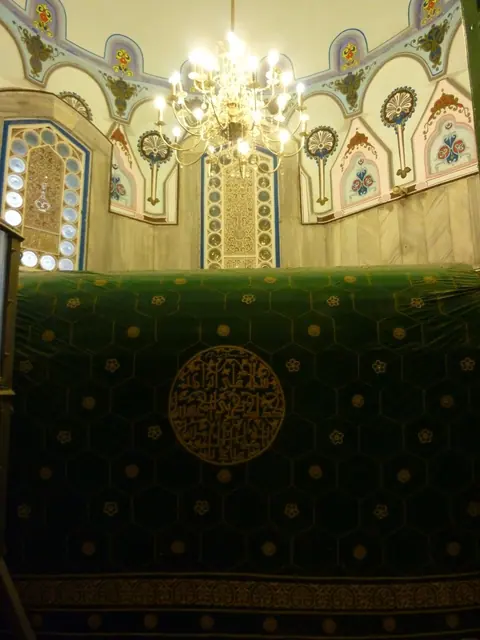
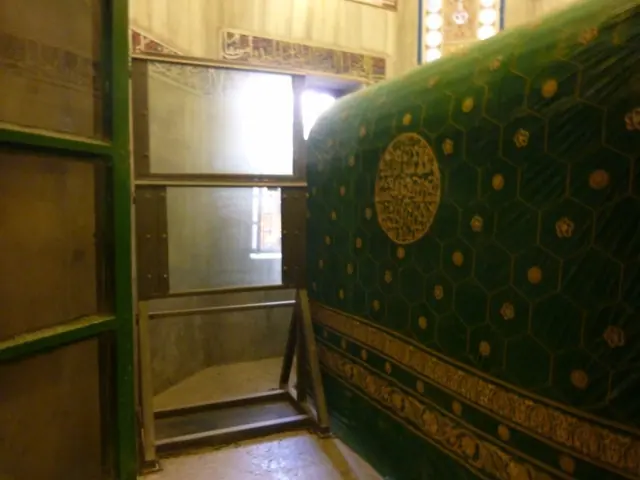
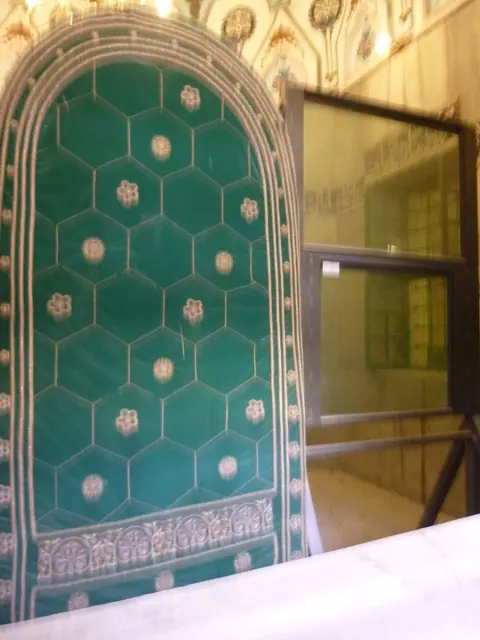
The mosque was shut down in the aftermath of the attacks, and it was opened several months later as both a mosque and a synagogue. Bill and I were allowed in both sides, but Kamal, even as a Christian, could only enter the Muslim side because he was a Palestinian. This was just one example of why, over the course of the day, this conflict revealed itself as a political one more than a religious one. Sure, religion is used as a rallying cry and a recruiting tool, but in reality, it seems a lot more about land and human rights at the core.
The Tomb of Abraham is symbolic of the entire Israeli-Palestinian conflict. The father of both religions is buried here, as is Isaac, and according to legend, Ishmael. Throw in Sarah, Rebecca, Jacob, Leah, and other biblical figures, and you pretty much have a Judeo-Islamic all-star team graveyard. But like the land itself, it is divided and separated by a wall, in this case one made of bulletproof glass. Back outside, Kamal instructed us to walk down what he referred to as “Ghost Street.”
“I won’t make it past the second check point,” he said, “so I’ll meet you on the other side.”
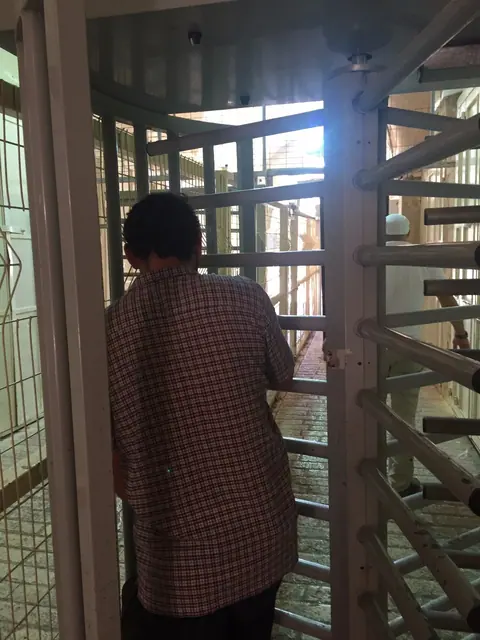
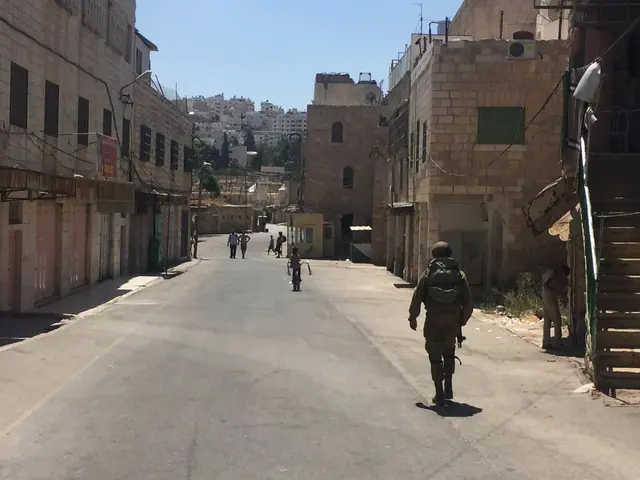
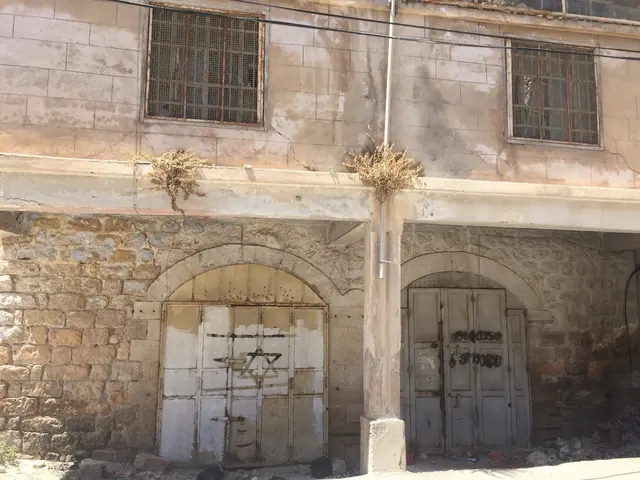
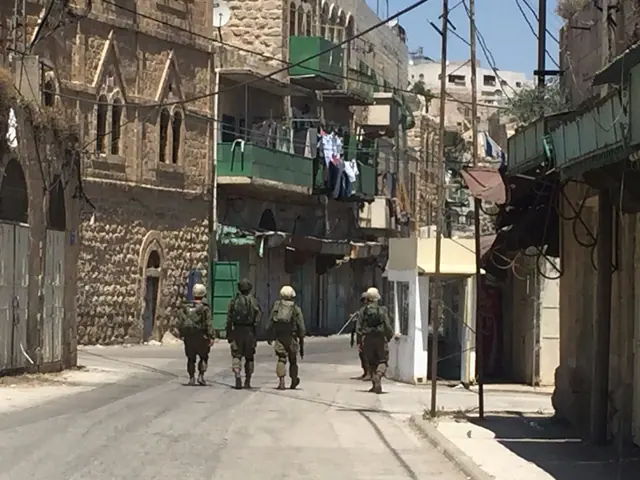
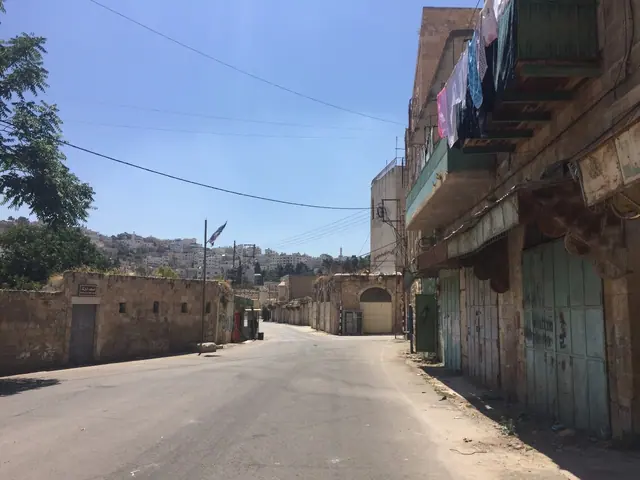
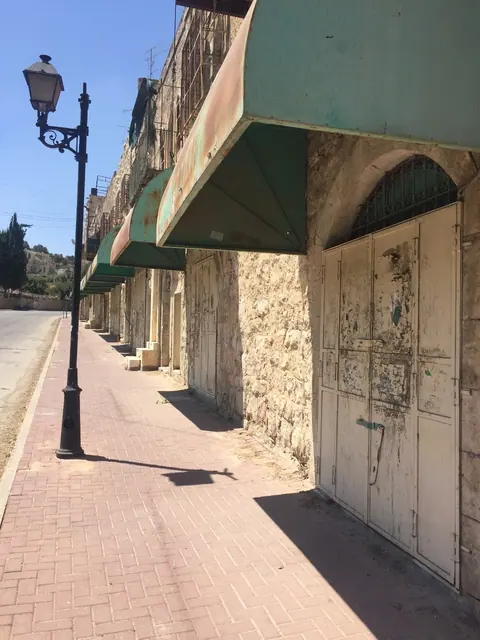
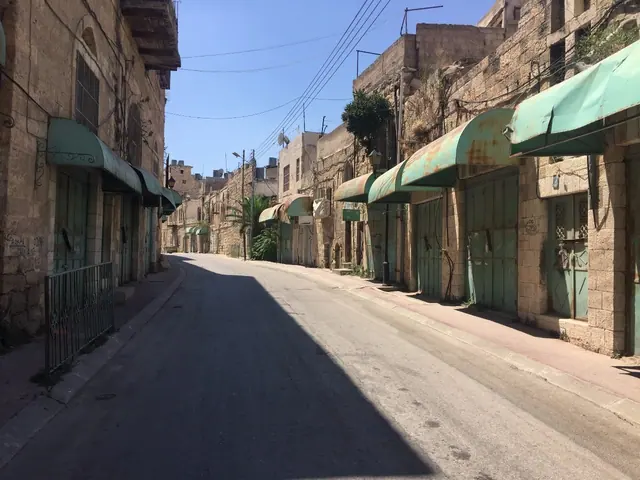
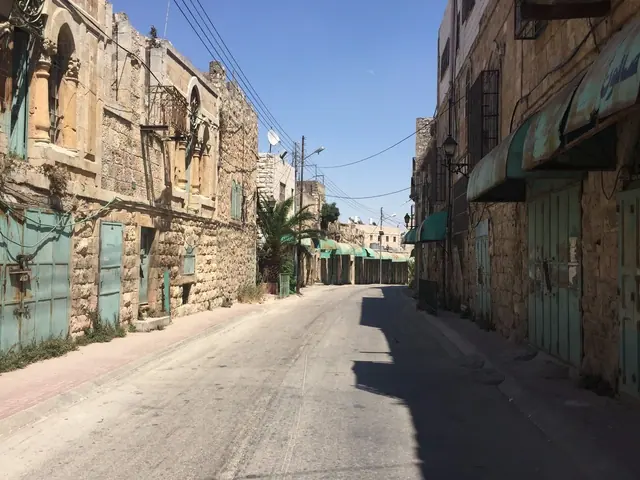
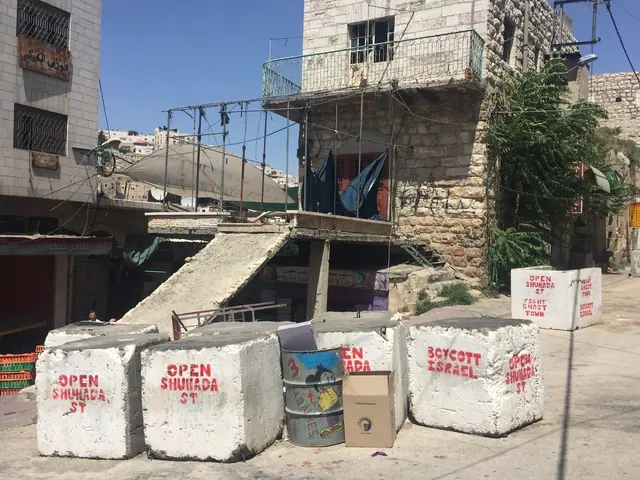
Ghost Street, or Al-Shuhada Street as it’s officially called, is a long, deserted street that runs the length of the backside of the market. All the shops are boarded up. Nobody is in the street aside from an occasional settler and patrolling Israeli soldiers. Settler children are looking down at us laughing and yelling hello, waving. Soldiers are checking us out at four different checkpoints asking to see our passports and wanting to know what religion we practice.
There are a handful of Palestinians who live on this street, but it is mostly reserved exclusively for the settlers. In reality, it is a horrible way to live and an even worse way to raise your family. I don’t care how devout you are or how big a statement you want to make, it’s wrong to raise your children in those kinds of conditions on purpose, for the sake of your own “spiritual” fulfillment.
“Who the fuck would ever want to raise their kids like this,” was all I could say to Bill over the last half of our walk down Ghost Street.
We met up with Kamal on the other side, and on our way out of town, he told us he was glad it was Tuesday. He doesn’t take tourists to Hebron on Fridays, because after the imams give their weekly talks, people can get angry. They may yell at you or throw stones at you, he said.
And he doesn’t take tourists to Hebron on Saturday, either, because that’s when the settlers march through the Arab market with protection from the Israeli soldiers. They are known to taunt, spit, and throw things at the Arabs, which also creates a less-than-ideal environment for tourists. I’m glad it was Tuesday because those few hours in Hebron were mind-blowing.
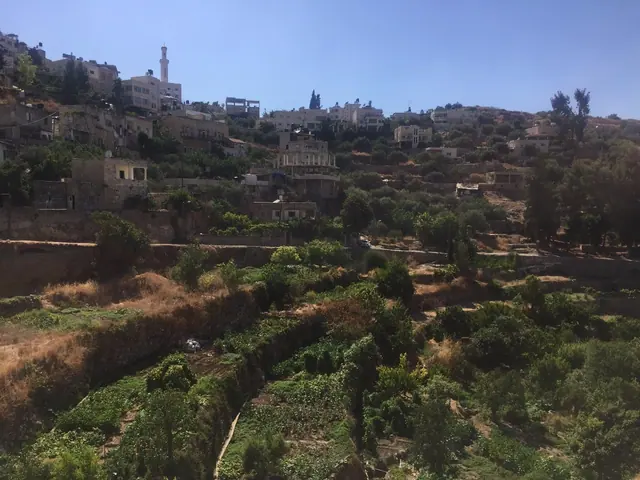
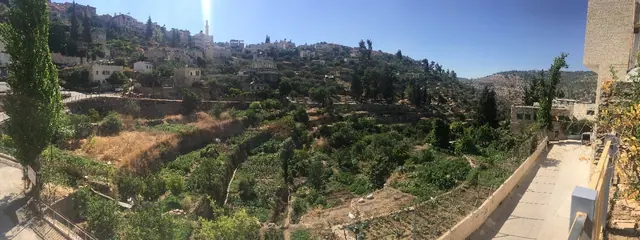
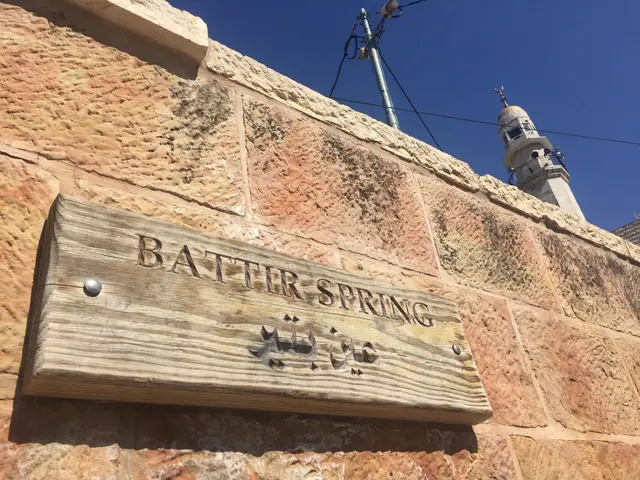
After Hebron, our next stop was the ancient irrigated terraces of Battir. The village sits in an amphitheater-shaped valley with the village on top and the terraced landscapes below. We refreshed ourselves with some ice cold water from one of Battir’s natural springs, and we strolled down through the vines and olive trees and farms that are, to this day, irrigated with a Roman-era water system.
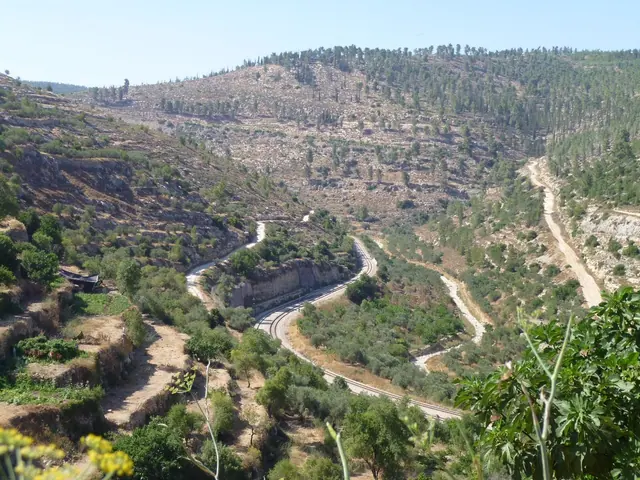
The terraces were beautiful, and way down at the bottom of the valley sits the main train line that runs between Tel Aviv and Jerusalem. Kamal explained how the villagers struck a deal with the Israelis to allow them to still work the groves just on the other side of the tracks in exchange for a promise of not to sabotage the train. The deal stood until the Israelis decided to build the separation wall right through the heart of the valley.
The townspeople had many meetings, he said, to determine a solution. Some suggested sabotaging the train or even sending suicide bombers. But others wanted a different solution, and eventually, someone determined that if the site was recognized as a UNESCO World Heritage Site, the wall could not be built. Eventually, this plan was successful, and the ancient terraces remain pretty much as they have for the past few millennia.
On the way back to Bethlehem, we drove along a road with another road running parallel. One was for settlers, and one was for Palestinians. They eventually merged, and at that location, the local migrants had begun lining up for cabs to take them home. In reality, the separation fence is less than 70 percent complete, and every day, an estimated 30,000 Palestinians illegally enter Israel to work the job sites. The Palestinians are the builders in Israel much like the Mexicans are the builders in the United States.
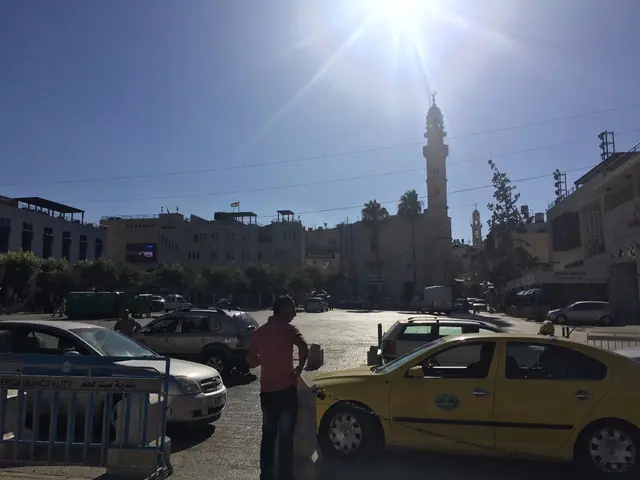
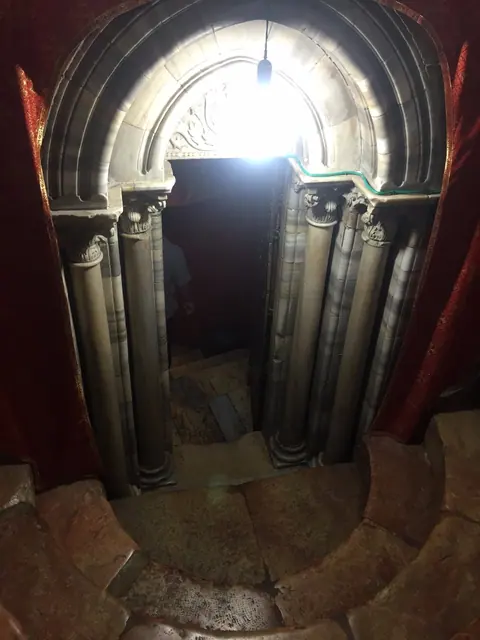
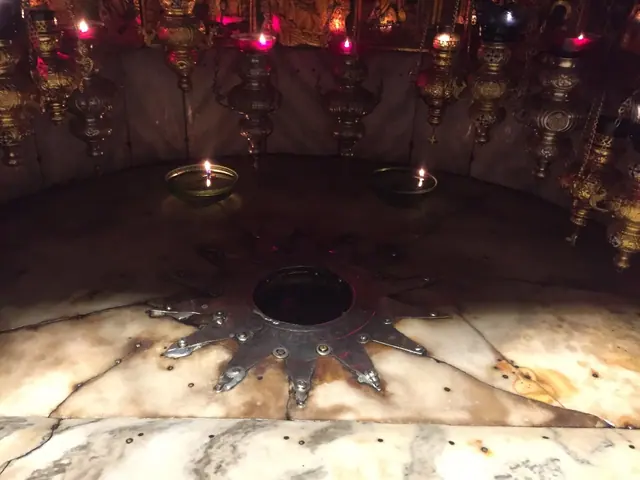
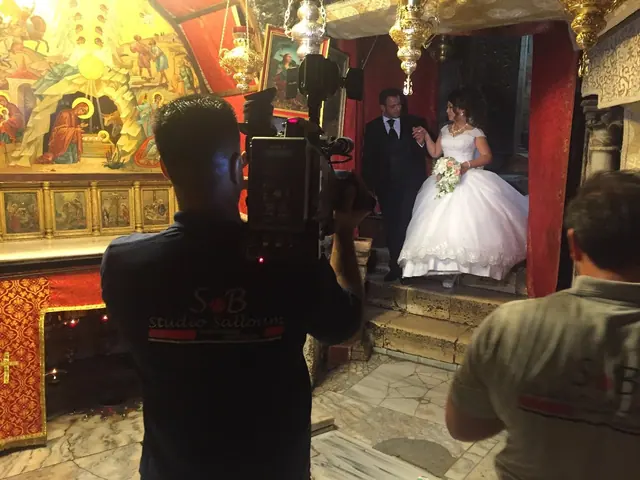
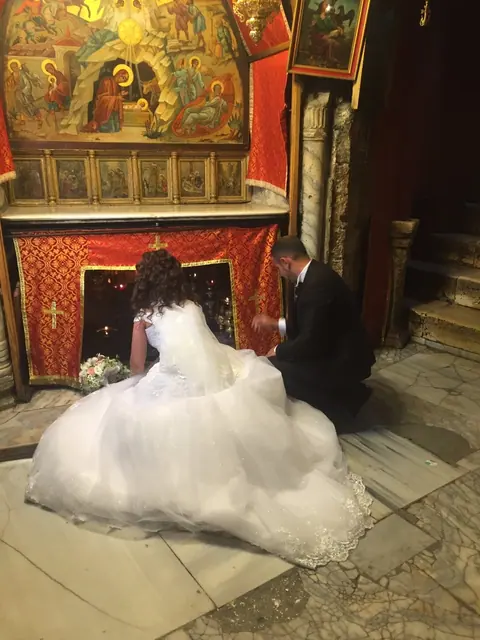
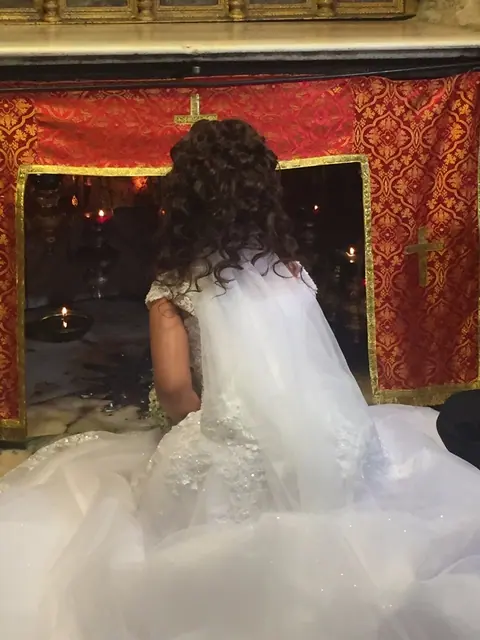
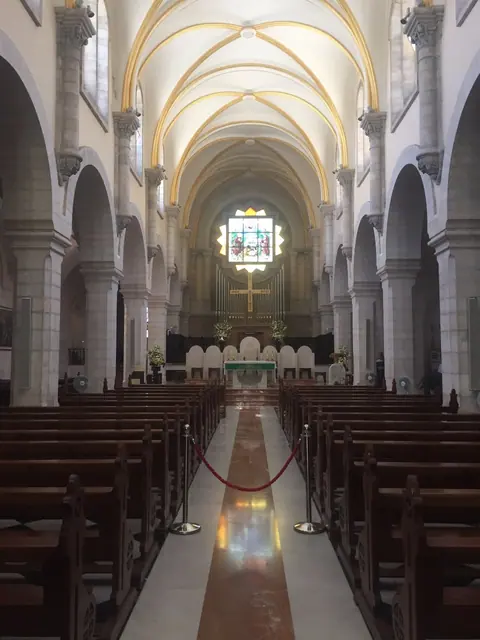
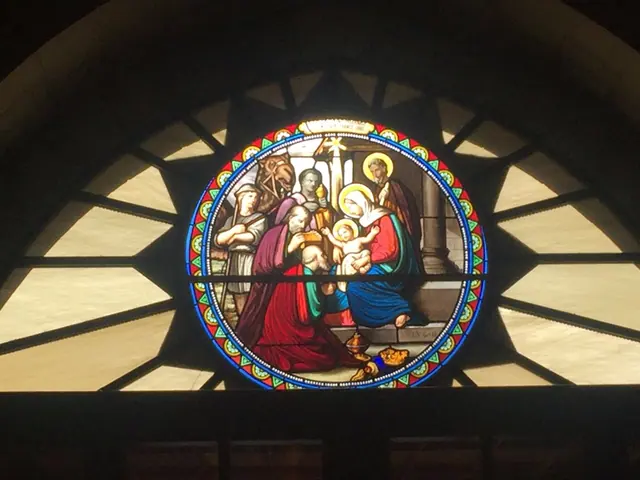
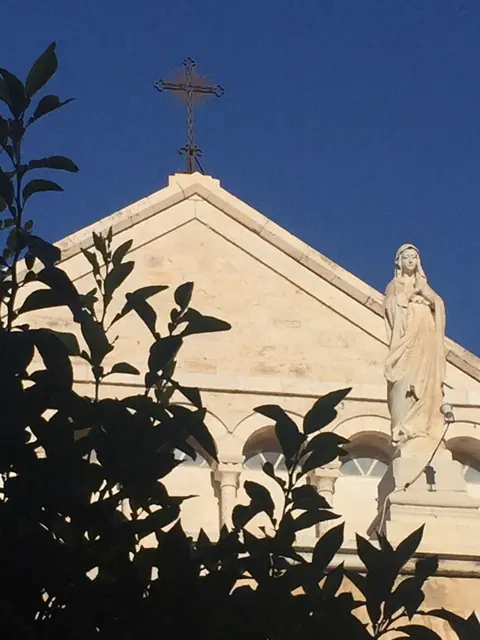
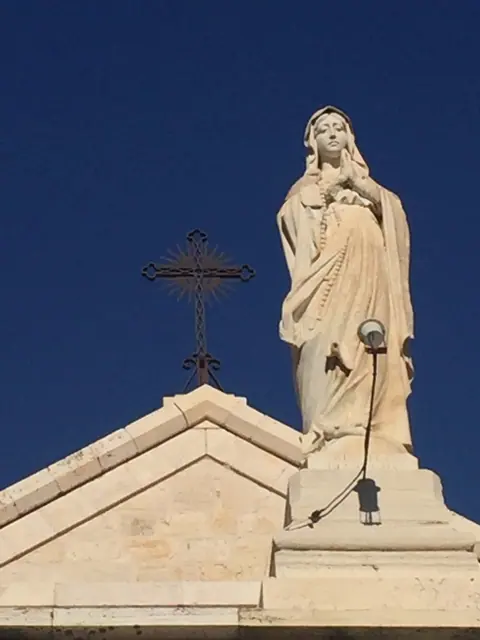
We got to Manger Square, the Church of Nativity, and headed down into the Grotto of the Nativity, which is the site where Jesus was said to have been born. Typically, Kamal said, you can wait for up to an hour just to walk down the steps and into the grotto, but for us, the place was empty. In fact, we were the only ones in there for a good handful of minutes, and I tried to find the power in the room. The real showstopper, though, was the bride walking down the steps a few minutes after us, who was followed by her new husband to take some photos at the baby Jesus spot. It was really a cool moment to witness.
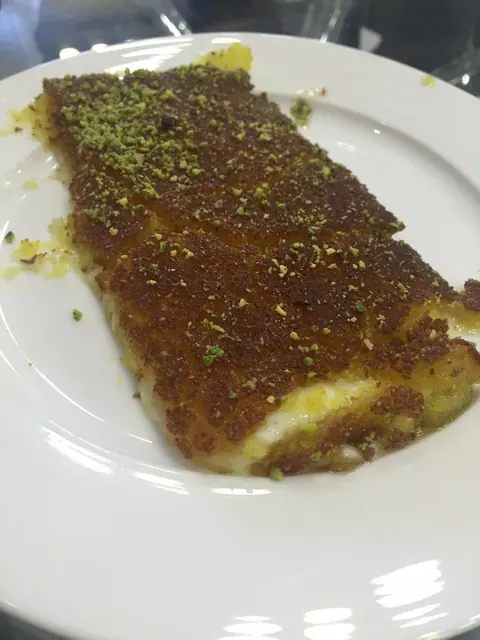
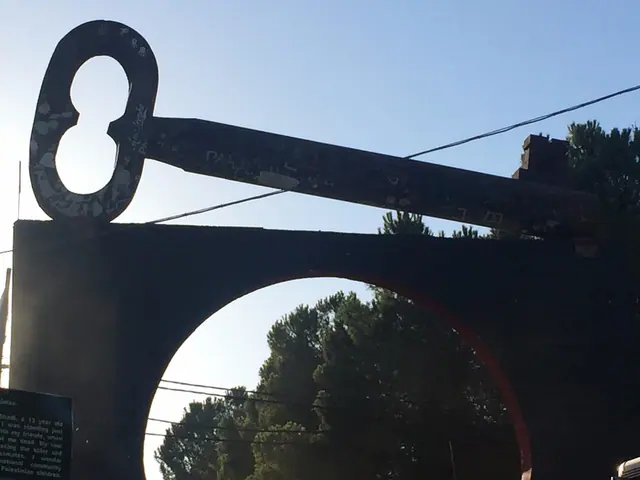
After a quick stop for authentic Palestinian pastries, we headed for our final stop of the day – the Aida refugee camp. The camp was created in 1950 by refugees displaced from the Jerusalem and Hebron areas, and today it holds more than 5,000 people, a massive “key of return” representing the hope that its residents will some day return to their own homes, and more political art. On the way through the camp, Kamal saw his cousin and said hello.
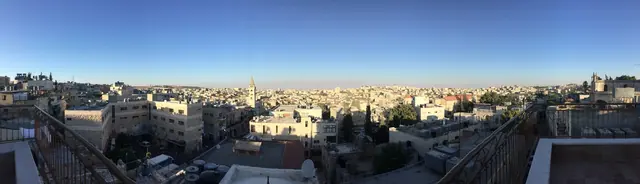
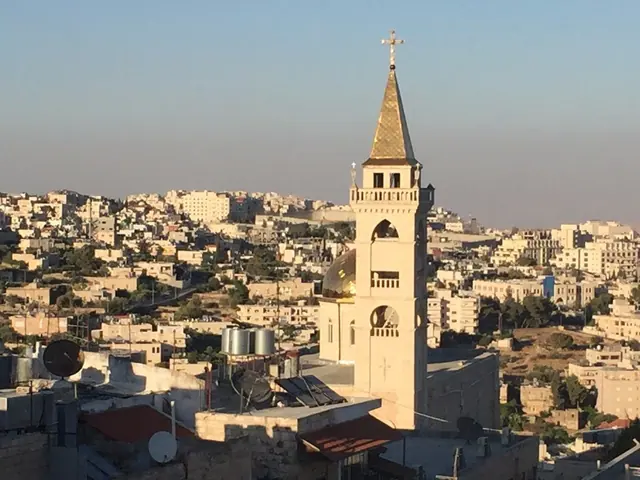
We headed back to Kamal’s house, where we sat on his upstairs terrace overlooking Beit Jala and Bethlehem in the distance. We ate watermelon, and finished the bottles of water he gave us earlier.
“My wife says I don’t drink enough water.”
Kamal is a basketball player and a coach for the local woman’s team. That’s how he met his wife. In his town, you can only go on a handful of dates before you need to seriously considering popping the question.
“I just couldn’t marry someone I really didn’t know,” he said.
So what did he do? He decided to coach the woman’s team so he could get to know them beyond a few awkward dates. He eventually fell in love with one, and they had their first child, a baby girl, back in January. We met them both on the way downstairs. Our taxi was ready to take us back to Israel.